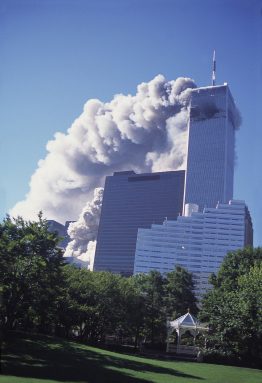
To casual observers, the downfall of communism seemed to suggest that liberalism would now be the world’s dominant ideology. The Cold War had for so long focused attention on communism as a rival to liberal democracy, that other ideologies that challenged liberal notions had received little attention. That all changed on a warm, September day in 2001 when hijacked American airliners slammed into the World Trade Center in New York City, the Pentagon in Washington, D.C., and a farmer’s field in Pennsylvania.
The 9/11 attacks, as they became known, brought Western liberal democracies into conflict with various factions supporting militant Islam. The attacks also brought to the forefront the issue of whether the world’s societies should conform to liberal ideals and, if so, how liberalization should be accomplished.
In this lesson, you will explore the following question: To what extent should liberalism be the dominant ideology in the twenty-first century?
In his book, The Clash of Civilizations, political scientist Samuel Huntington suggests that the major conflicts of the twenty-first century will not be along ideological lines; instead, Huntington argues, conflicts will be along cultural and religious lines. However, if one views ideology as a set of beliefs and values, then the beliefs and values that guide the actions of groups like Al Qaeda, the Taliban, and ISIS/DAESH are indeed an ideology.
Some analysts and security experts refer to this ideology as Islamic fascism, trying to somehow link radical Islamic factions with more familiar anti-liberal ideologies that have sprung out of Western society. Others have criticized this labeling as simplistic, inaccurate, and offensive to many Muslims. It is important to be aware that many Islamic authorities have criticized Al Qaeda, the Taliban, and ISIS/DAESH for their violent acts, restrictions on education and other rights for women, and for their interpretation of Islam.
The rise of groups like Al Qaeda, the Taliban, and ISIS/DAESH has, however, highlighted the fact that many people in the world view liberalism as a product of the European Enlightenment and Western societies. Liberalism’s fundamental principles often place the ideology at odds with the longstanding cultural, religious, and legal traditions of various societies.
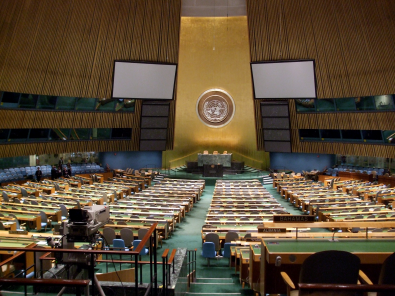
In 1945, at the end of World War II, the United Nations was set up with the primary goal of putting an end to war. While the U.N. was intended to provide a forum for all nations to discuss and confront important issues facing the world, its structures and the realities of the post-war world arguably gave Western nations considerably more influence than those of, for example, African and Asian nations.
A few years later, in 1948, the General Assembly of the U.N. adopted the Universal Declaration of Human Rights, a document outlining the fundamental rights to which all people of the world should be entitled.
Afghanistan has a turbulent history. Britain invaded Afghanistan three times, in the 19th and early 20th centuries, to protect its control of India and to prevent Russian influence in the region. The British learned the hard way that Afghans were very independent and strong-willed people who resisted British occupation. After regaining full independence in 1919, Afghanistan enjoyed friendly relations with the Soviet Union.
A coup by communist forces overthrew the Afghan government in 1978. This new communist government was in turn overthrown by rival communists in 1979. The Soviet Union used this political instability as a pretext to support yet another coup and this new Soviet-backed Afghan government "invited" the Soviet Union to invade Afghanistan to restore stability (the Soviet Union was concerned about American influence in the region). The Soviet occupation of Afghanistan began in December 1979 and was one of the "hot" proxy wars during the Cold War.
An Islamic movement, called the Mujahideen, was opposed to communist and Soviet control of Afghanistan and they resisted the Soviet occupation of their country. The Mujahideen were supported by the USA and the military dictatorship in Pakistan. Pakistan is Afghanistan's neighbour and was an ally of the USA during the Cold War. As part of America's efforts to resist Soviet expansionism, the USA supported the Mujahideen with military training and weapons because of the Mujahideen's anti-communist stance. Although the Soviets and the Americans did not fight directly, there was an ongoing war between the Soviet Union and the Mujahideen forces. This war lasted from 1979 to 1989 when Gorbachev withdrew all Soviet forces from Afghanistan (the war was a drain on the Soviet economy and Gorbachev wanted to end the general worldwide confrontation with the USA to proceed with democratic and political reforms in the Soviet Union).
Even though the Americans provided aid to the Mujahideen and promised to rebuild Afghanistan after the war was over, they failed to fulfill their promise. What was left behind was a war-ravaged country with well-trained and well-armed soldiers, many of whom arrived from other Muslim countries to help the Afghans resist the Soviet occupation. One of these Mujahideen soldiers fighting the Soviet occupation was Saudi-born Osama bin Laden, the infamous al-Qaeda leader behind the 9/11 attacks on the World Trade Center in New York City.
Some of the Mujahideen supported a political party known as the Taliban. After the Soviet Union left Afghanistan, a new war-ravaged Afghanistan again in the 1990s - this time a civil war between rival Afghan factions and warlords. The Taliban was the faction that gained control of most of the country in 1996 (with support from Pakistan's secret services). The Taliban ruled Afghanistan according to its extremist interpretations of the teachings in the Qur’an, the sacred text of Muslims.
The Taliban’s radical interpretations of this text are rejected by most Muslims throughout the world. Just as most Christians reject the Ku Klux Klan and other Christian extremist groups for their radical interpretation of Christianity.
Another Muslim extremist group, known as al-Qaeda and led by Osama bin Laden, shared similar ideologies with the Taliban and was allowed to operate and open terrorist training camps in Afghanistan. Al-Qaeda declared a holy war—a jihad—on the countries of the West and the illegitimate dictatorships and authoritarian monarchies in the Muslim world - many now supported by the Western liberal democracies, and the USA in particular (eg. Egypt, Saudi Arabia; Jordan, Qatar, Bahrain, and others). Al-Qaeda would like to see all Muslim countries governed by their extremist interpretation of the Qur'an. Al-Qaeda uses terrorism to strike whenever possible to fight for its cause.
On September 11, 2001, the World Trade Center (sometimes called the Twin Towers) was attacked in New York City. The attack, often referred to as 9/11, was linked to Osama bin Laden and al-Qaeda.
Why would anyone want to attack buildings in New York City? In one way or another, 9/11 was a terrorist blow to the United States, on its home soil, intended to protest the United States continuing support of Israel and what is regarded to be interference in Middle-East affairs. Al-Qaeda and the Taliban feared the expansion of Western influence and ideology and the threat this would cause to the structure of Muslim societies.
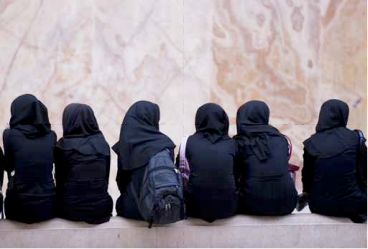
The large majority of Muslims throughout the world reject the extremist teachings of the Taliban and al-Qaeda. Many Muslim countries grant equal rights to all Muslims in society. In some Muslim countries, women hold government positions, are university-educated, and function as equal members of society. Most of these countries, however, are not liberal democracies. Many of them are authoritarian monarchies or dictatorships but support capitalism and the extent of political freedoms varies from country to country. Under Taliban rule, however, women are not granted equal rights and opportunities. Women are to stay at home, raise children, and maintain the household.
The World Trade Center in New York dominated the skyline and represented the economic backbone of the United States. Al-Qaeda’s goal was to disrupt the everyday lives of Americans and to bring jihad to the Americans’ homeland. They also wanted to lure the USA into a long drawn-out war in Afghanistan. The Mujahideen believed it was their war against the Soviet Union that caused the economic collapse of that superpower. Al-Qaeda believed they could use the same formula to defeat the other superpower, the USA, by drawing it into a new war in Afghanistan. How better to lure the Americans into a fight than by attacking the economic centre of their universe? Al-Qaeda did not have an army, so the group had to use other catastrophic means to disrupt American life.
The world was now more aware of al-Qaeda and two global enemies: terrorism and extremist ideologies.
Immediately after the 9/11 attacks, President George W. Bush vowed to bring the terrorists who attacked the United States to justice. Bush’s "war on terrorism" took place in various locations.
The coalition forces, including Canada and other allies, led by the American government, hoped to liberate Afghanistan from the Taliban government and to find Osama bin Laden, who was believed to be hiding in the mountains of Afghanistan, and destroy Al-Qaeda in Afghanistan. Starting in October 2001, daily bombings of the area failed to help locate bin Laden. It was thought that bin Laden was now hiding in the lawless tribal areas of neighbouring Pakistan.
For many years there had been rumours of bin Laden’s hiding places, but he remained elusive until he was finally located and assassinated by American special forces in a raid on his house in a Pakistani city - 10 years after the 9/11 attack.
Meanwhile, the Taliban resistance in Afghanistan proved to be stronger than predicted. The coalition forces fought the Taliban for 10 years and worked hard to establish a democratically elected government in Afghanistan. Under NATO, the Canadian military aimed to bring security, services, assistance, and democracy to Afghanistan, while fighting the Taliban. Canada ended its participation in the war in Afghanistan in 2014. The US and some other allies remain in Afghanistan to this day. In 2019-2020, the Trump presidency engaged in negotiations with the Taliban to end the war.
The United States and some allies (not Canada) invaded Iraq in March 2003. The main goal was to find Saddam Hussein and the “weapons of mass destruction” it was believed he possessed. Bush claimed Iraq aided Al-Qaeda.
Project Shock and Awe was President George W. Bush’s military strategy. The coalition forces would enter Iraq with such force that the government would collapse, and a new democratically elected government would be elected.
Saddam Hussein was eventually found and arrested. President Bush and the other leaders expected that a change of government would reduce the threat of worldwide terrorism and end extremist attacks and give Western oil companies access to Iraq's massive oil reserves. It was later proven that Iraq did not possess nuclear or biological weapons and played no role in 9/11, the reasons given for going to war in the first place.
American forces had hoped to be in Iraq for a short period. However, the U.S. was not able to stop the resistance forces that still supported Saddam Hussein. Al-Qaeda members from all over the Muslim world went to Iraq to support the resistance to the American occupation. Sunni and Shia Muslims fought each other and the Americans. The war that was meant to establish a liberal form of government quickly and decisively lasted from 2003-2011. By 2013, a new war had erupted with an even more extremist group rising out of the ashes of the US-Iraq war: ISIS/DAESH (see below) fighters had seized control over large parts of Iraq and Syria and now with affiliates in other countries. Is more military intervention the solution?
Many terrorists have declared a jihad on liberal democracies. They attack liberal values and seek to create a new world order. What liberal values do these extremist ideologies and terrorism threaten?
The Islamic State in Iraq and Syria (ISIS or ISIL, or just IS and also known as DAESH - the acronym for the Arabic translation of ISIS) is a breakaway group from Al Qaeda in Iraq, and even more ruthless. In 2013-2014, they seized large parts of Iraq in the aftermath of the US war in Iraq and expanded into Syria as well during the chaos of a civil war in Syria between the authoritarian Syrian government and reformers (one of a series of popular uprisings against authoritarian governments known as the Arab Spring, beginning with the Tunisian Revolution in late 2010). By 2014, ISIS controlled a vast swathe of territory stretching across Iraq and Syria.
ISIS has also established itself in other countries, like Afghanistan, Pakistan, Libya, Egypt, Algeria, Nigeria, and Yemen.
Today, President Biden has become the President of the USA, he withdrew American forces along with all other Western forces and peacekeepers and Afghanistan has returned to Taliban rule after overthrowing the government. Under the Taliban, thousands have fled and poverty, drought, and hunger are just some of the humanitarian issues gripping the nation.
How should your government respond to international problems like this? What did Canada do after 9/11, what are we doing today with the crisis in Ukraine?
In November 2014, under Prime Minister Stephen Harper, Canada joined the USA and other allies, including the Iraqi Armed Forces and Kurdish militias, in the war in Iraq against ISIS, deploying CF-18 jets to bomb ISIS targets in support of the Kurdish militia and Iraqi Armed Forces in Iraq only, at first, but later in Syria too. Plus a small mission on the ground training Iraqi armed forces.
In February 2017, Prime Minster Justin Trudeau canceled Harper's bombing mission in Iraq. However, Trudeau significantly expanded the number of Canadian soldiers on the ground to train and advise Iraqi and Kurdish security forces. Canadian armed forces personnel were also operating a field hospital to treat Iraqi and Coalition forces. Despite the cancellation of the CF-18 mission, Canada continued to deploy an aerial refueling tanker aircraft for mid-air refueling of other Coalition aircraft doing the bombing; a surveillance aircraft; and a helicopter contingent to support Canadian ground forces in their training and advisory role.
Is there a third option? Can you connect these options and your view to the ideological perspectives studied in the course?
For a different perspective, see this excerpt from the Statement of Principles by the Project for a New American Century:
America faces an opportunity and a challenge: Does the United States have the vision to build upon the achievements of past decades? Does the United States have the resolve to shape a new century favorable to American principles and interests? ... We seem to have forgotten the essential elements of the Reagan Administration's success: a military that is strong and ready to meet both present and future challenges; a foreign policy that boldly and purposefully promotes American principles abroad; and national leadership that accepts the United States' global responsibilities."
- Statement of Principles by the Project for a New American Century
PNAC was a group of US right-wing neo-conservatives supporting George W. Bush during his presidency. They encouraged a US invasion of Iraq.
Ethnocentric: a perspective that holds that one's own culture is superior
Extremist: a person who holds extreme or fanatical political or religious views, especially one who resorts to or advocated extreme action
Coalition: an alliance for combined action, especially a temporary alliance of political parties that forms a government or of states
Humanitarianism: a doctrine that promotes improvement to the standard of living or quality of life of others, often through outside intervention
Jihad: a holy war
Qur'an: the sacred text of Muslims
Self-interest: consideration of one’s position, often without regard for the welfare of others
Taliban: a political party
Theocracy: a government run by religious leaders and guided by religious doctrine
War on terror: a term used to describe actions taken to combat global terrorism in the wake of the 9/11 attacks on the United States
Despite the general demise of ideologies like fascism and communism, liberalism is not without ideological competitors in today’s world. Many societies subscribe to other ideologies, which, while they may have some commonalities with liberalism, still differ from liberalism in important ways. Efforts to spread the value system of liberalism beyond its current geographic boundaries are not without controversy.
For some, liberalism is seen as a product of Western culture—a set of foreign values that Western democracies wish to impose on the rest of the world in the same way that European nations attempted to impose their cultures on others during the Age of Imperialism. For others, liberalism represents something of a Trojan horse—a means by which the West can open up the rest of the world for economic exploitation under the pretext of freeing people from oppression.
Liberalism is sometimes fraught with problems in societies where liberal democracy has recently been established. For example, elections in countries with already-stressed relations between tribal, cultural, or religious groups can lead to instability. In such situations, it is arguable that the introduction of liberalism results in more harm than good. Can you think of any examples?
For some, the desire to spread liberalism is based on humanitarianism. Some humanitarians seek to gain for others around the globe the liberty, equality, and justice for which many groups within existing liberal democracies fought for so long. If one accepts this goal as worthy, the question then becomes how to achieve the goal.
Take a few minutes to do some research and make connections to your previous learning in the course:
You may want to access the following additional resources.