
In the previous lesson, you examined some beliefs and values and even started to look at some of the reasons people have the beliefs and values they do. In this lesson, you will delve into this in more depth and start to examine the factors that typically contribute to the development of an individual's system of beliefs.
In this lesson, you will explore the question: What factors influence beliefs and values?
In the last lesson, you discovered that some people have very strong beliefs regarding certain issues. Sometimes a person's beliefs are a result of a particular experience they had as an individual. For example, a person who has been the victim of a violent crime may be more likely to believe that criminals should receive harsh sentences than someone who has never been touched by crime. However, as well as these individual experiences, several common factors shape people's beliefs.
Culture is a broad term that can include, among other things, the values, religious beliefs, language, food, clothing, marriage customs, and approaches to child-rearing that are shared by a particular person. Can you think of other factors that might be added to this list?
Consider this; how could the environment and way of making a living affect culture? For example, would the people in a maritime fishing community have the same cultural values as a prairie farming community or a large city?
As people have been confronted by different environmental conditions, different economic problems, and different relationships with neighbouring peoples, there evolved a tremendous variety of solutions to deal with these matters. As these solutions were passed from generation to generation, they crystallized into the distinctive varieties of culture that characterize the world's different regions.
Culture is learned and passed on from one generation to the next. Each of us is born into a specific cultural situation, absorbing the values, attitudes, and behavior patterns of our culture. Family, community, school, church, things we read, and television shows we watch help mold you into the person you are.
A language is composed of a set of agreed upon symbols and rules. Language, like other aspects of culture, can be an important factor in shaping and reflecting beliefs and values. Language is often a powerful symbol of identity. Many groups believe that allowing foreign words into their language's vocabulary somehow undermines or even "pollutes" the language. Words are often used to frame a people's most important ideals. Think about the lyrics of national anthems that you know. What ideals are implied in the lyrics? Freedom? Loyalty? Courage?
Language can also help define cultural taboos. Think about words that are considered "swear words". They are often associated with religion or sexuality. Finding out which words are considered most "taboo" in a language can provide a great deal of insight into what ideals are important to a society where swearing is considered anti-social.
Language can even be an indicator of political power. For many French Canadians, for example, maintaining the supremacy of French over English in Quebec is closely associated with the idea of political autonomy.
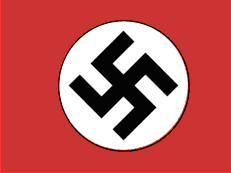
Language is more than just spoken or written words. Iconic images or symbols can play an important part in communicating ideas. The swastika is the well-known and reviled symbol of one of history's most brutal political regimes. The swastika, however, is also a very ancient symbol. It appears in artworks created in Asia thousands of years before the birth of Hitler's Nazi regime in Germany. Historically, the swastika was associated not with war, cruelty, and genocide, but with good luck. As a boy, Adolf Hitler sang in a church choir. A swastika is inscribed on the wall across from the choir box in the church where Hitler no doubt spent many hours of his youth during choir practice. Some have suggested that this is where he was introduced to the crooked cross that would later become the symbol of the Nazi party. Regardless of the reason he chose it, Hitler's adoption of the swastika radically changed the meaning of the symbol. In the Western world, at least, it is recognized by most as a symbol of evil. In some countries wearing or displaying it is a crime.
Understanding the language of symbols is important. Your ability to interpret photographs and political cartoons will rely heavily on your knowledge of commonly used symbols. Can you think of other important and readily recognizable symbols? What icons might a political cartoonist use to symbolize the idea of freedom? Of greed? Of poverty?
Today, online platforms, television, film, and print media have become an effective and efficient mediums for conveying political statements on a global level. The media is tremendously influential.
For most people, an understanding of world events comes through a journalistic filter. Since there are endless news stories that could be reported, writers, editors, and print and television executives must make choices about what to cover and what to ignore. These decisions are influenced by factors such as what stories will draw readership or viewers and what stories might discourage advertisers from buying time or space from the media organization.
Many people complain that the news is depressing. Media professionals would be likely to respond that that is because disaster, war, and crime stories draw in more readers or viewers than "happy" stories. Some observers would argue, however, that the public is often left with a picture of their world that is darker than actual reality.
Even for those who consume little in the way of formal news, media is no less influential. Shows, movies, and music videos can establish trends for style and social behavior as well as subtly alter people's perceptions of the world around them.
The internet represents history's most revolutionary leap in the delivery of media. As technology has improved, the power to publish news, opinions, and images or to produce audio and video works is no longer the sole province of newspapers and television networks. Anyone with a computer and internet access can not only access a huge repository of information but can publish a post or video for the world to see. Many observers have referred to this phenomenon as the "democratization of the media".
The integration of phone and internet technologies is also making the internet more accessible to people in the developing world. The internet is fast becoming the first truly global medium. The social, political, and cultural implications of this level of media access and exposure are compelling and complex.
Others who also make their living directly from the land or sea, such as farmers and fishermen, develop a unique understanding of the relationship between humans and the land that supports them. Rapid industrialization and urbanization have led many societies to deemphasize the notion of human stewardship of the natural world and to view the land primarily as a store of resources to be harvested. In some industrialized societies, this is changing as even urban dwellers are coming to recognize their impact on the natural world.
The land is also frequently associated with the concept of nationalism. The ongoing conflict between Israelis and Palestinians, for example, finds its roots in those peoples' deep cultural and religious connection to the same piece of territory. Both World War I and World War II were a result, at least in part, of the desire of particular national groups to reclaim the land they felt was "stolen" from them by an aggressor. The fact that so much blood has been spilled over land highlights the importance of a people's relationship to the land as a factor influencing their beliefs.
Even in societies where gender equality is encouraged, there is little doubt that one's gender is a significant factor in shaping beliefs.
While there is some scientific evidence that biological factors may play a role in the different ways men and women respond to the world around them, the enculturation a young boy or girl receives as they are growing up is likely to be far more influential. In some countries, the accepted rights and roles of men and women differ significantly. For some, strongly defined gender roles are comforting and offer a clear understanding of their place in society. For others, rigid gender roles represent a limiting of human potential and are something to be broken down or resisted.
How do you think your gender influences your beliefs and values? Can you think of some ways your values and beliefs differ from your peers of the opposite gender? Can you see how some beliefs may be influenced by gender? What impact to you think the western trend toward modifying and blurring traditional gender roles will have on society?
Belonging to a particular religious group can have an immensely powerful influence on an individual's beliefs and values.
Faith is a deeply personal thing. At the same time, faith makes the individual part of a community that shares a vision of not only what this world should be like, but also how the "next world" will be. Through the centuries religious faith has motivated both acts of tremendous cruelty and violence and gestures of remarkable kindness and sacrifice. In some societies, it is the most dominant factor in shaping personal beliefs.
Do you have friends with different religious and/or spiritual backgrounds? What are some similarities and differences in their beliefs compared to your own?
Whether you consider yourself a politically aware person or not, ideology (a set of beliefs or values, in particular, those which form the basic components of a political or economic theory or system) has undoubtedly coloured your perception of the world you live in and helped to shape your beliefs about human nature and society. Ideology has also likely influenced your beliefs about how society should be organized and governed.
Can you name basic freedoms and rights that you think all people should have? What comes to mind? Freedom of speech? Freedom of religion? The right to a fair trial? If you came up with any of these answers without too much trouble, it is likely because you have grown up in, and were schooled in, a democratic nation. Alternatively, your family may have come to Canada because your parents shared the democratic ideals that are predominant in Canada and they passed these ideals to you.
In places where liberalism is not the predominant ideology, people's attitudes regarding what constitutes basic rights and freedoms may be radically different from the Canadian ideal. The idea that a citizen should be able to criticize the government might be summarily rejected by most people. "Who is this person who questions the wisdom of our great leader's decisions?" they might ask. In other places, the concept that a person should be allowed to openly practice a religion that differs from the "state religion" might be considered ridiculous. A good citizen would immediately report anyone doing such a thing to the religious police. Like you, these people's attitudes, values and beliefs have in some fashion been shaped by the ideology that is dominant in their country.
Whatever its "flavour", a shared ideology serves to unite people through a common set of beliefs and values, perceptions, and goals.
Ideology: a set of principles or ideas that explains your world and your place within it, which is based on certain assumptions and human nature and society and provides and interpretation of the past, an explanation of the present, and a vision for the future.
In this lesson, you have reviewed some of the major factors that shape people's beliefs and values. You have seen how religion, gender, language, ideology, and a people's relationship to the land might affect what they consider to be right or wrong, important or unimportant. You have also been introduced to the concept of ideology, which will be explored in greater detail in the next section. Finally, you have begun to explore how the different factors that shape personal beliefs come together to form a "belief system" and how such a belief system might serve to help individuals evaluate and respond to issues that confront them.
So far, you have learned how personal and collective identity is defined and what influences can affect how identity is developed. You have gained an understanding of beliefs and values and the factors that shape them. You have also begun to explore the relationship between beliefs and values both as they relate to your own identity and the identities of others.
Any one or combination of the "factors" explored in this lesson - like culture; religion; language and ideology - can form the basis of your identity.
This knowledge will be crucial as move toward answering the inquiry question of this unit: To what extent should ideology be the foundation of identity?
The portrayal of many cultural groups in Hollywood movies has often been criticized as promoting racism and stereotyping. For example, many Arab-Americans point out the absence of positive portrayals of Arabs and Muslims in Hollywood movies. Instead, movies like the 1994 Arnold Schwarzenegger blockbuster True Lies (or The Kingdom (2007), or even Disney's Aladdin), depict Arabs and Muslims as villains or religious and political fanatics or cruel and often bumbling terrorists. Can you think of more recent films that have portrayed Muslims and Arabs in a negative light?
Given the fact that Hollywood films like True Lies are usually shown in theatres across the globe, how do you think they influence Arabs' perception of America? What would your attitude be toward a culture whose film industry continually portrayed your people in a negative light?
You may want to access the following additional resources.