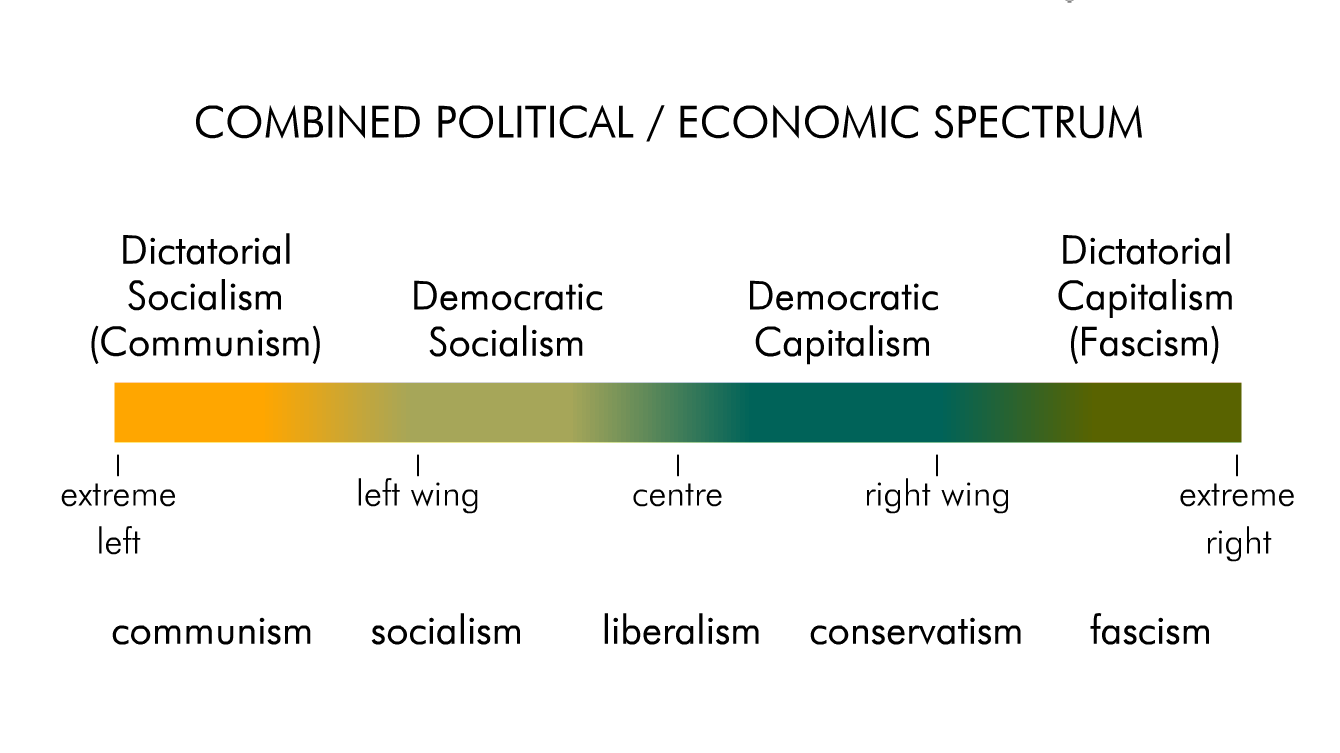
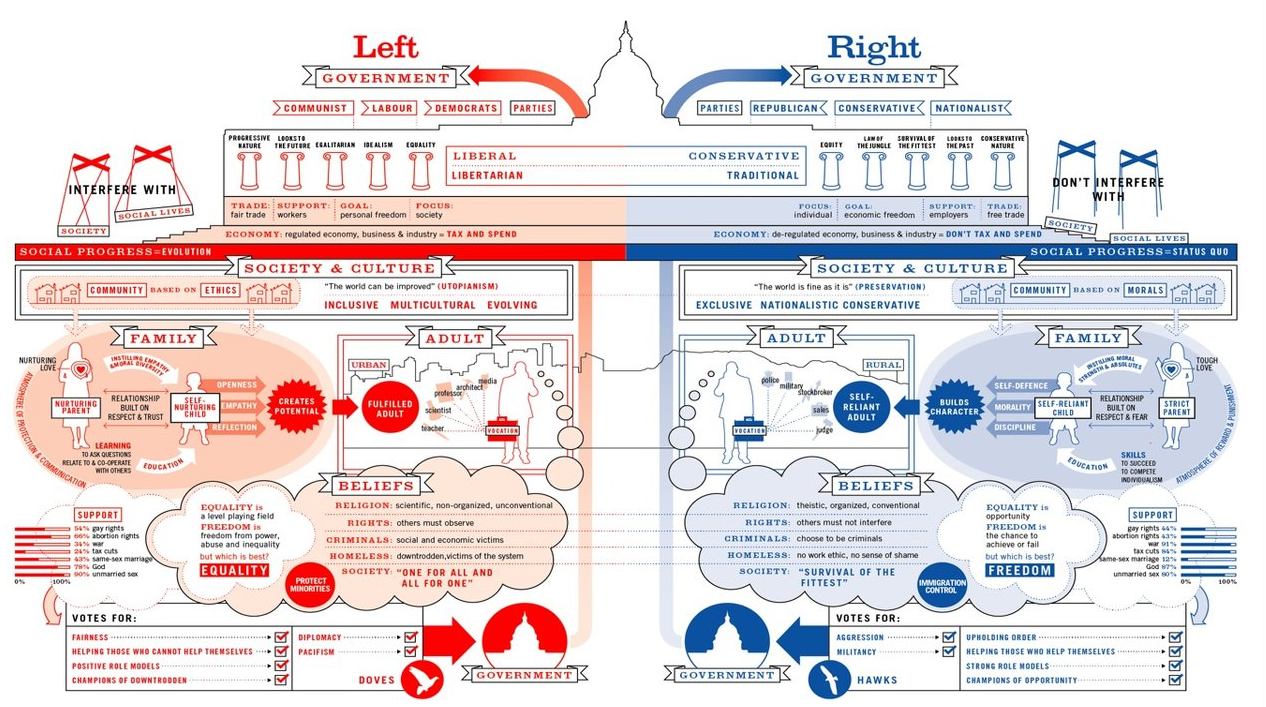
The political spectrum is a way to categorize and understand different political ideologies and beliefs.The most common representation is the left-right spectrum. On the left side, you generally find ideologies associated with progressivism, social equality, and a more active role for government in addressing social and economic issues. This can include ideologies such as socialism, communism, and social democracy. On the right side, you generally find ideologies associated with conservatism, individualism, and a limited role for government in economic and social affairs. This can include ideologies such as classical liberalism, libertarianism, and conservatism.
It's important to note that the political spectrum is not a perfect representation of all political beliefs. There are many ideologies and positions that do not neatly fit into a simple left-right framework. Additionally, political ideologies can vary across different countries and cultures, and individuals may have a mix of beliefs that do not align strictly with any one position on the spectrum.
Overall, the political spectrum is a tool that can help provide a general framework for understanding different political beliefs and ideologies, but it should be approached with nuance and an understanding of its limitations.
Click image to enlarge and view in a separate window
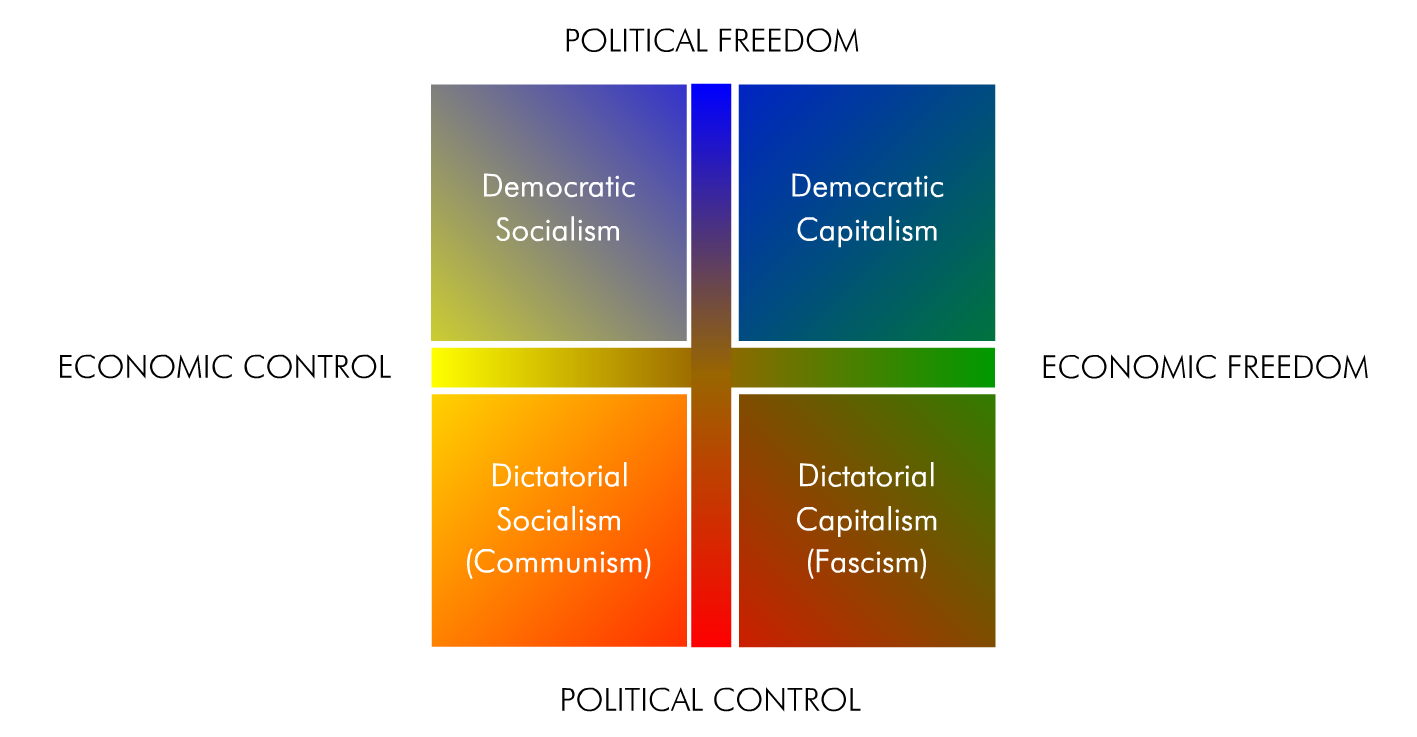
Political Spectrum: a system to characterize and classify different political positions in relation to one another.
When considering different ways of looking at society, we can often use a tool called a spectrum to help understand and differentiate common ways people think. A spectrum is not perfect, but is a continuum along which different ways of thinking exist and can be compared to each other. Generally speaking, political, economic and social values are what makes each position on a spectrum unique.
Visit this interactive website and explore the relationships between political and economic spectrums.
You may want to access the following additional resources.