You just moved out of your family home, and you bought your own house. You are happy to leave home and get away from all of the rules and chores. You are finally free to do what you want, where you want, and when you want. You are finally your own boss.
Several months later, you discover that you can’t afford your house by yourself. Two of your friends have decided to move in with you. They will share all of the costs and responsibilities of owning a house. You become co-owners, and you share the cost of electricity, heating, and groceries. You have to establish rules about how to share the space and how to make sure one person does not eat all of the food or destroy the furniture. Your property becomes the property of all three of you. You are no longer the master of your own home. You must live in a community.
What conditions made it necessary for you to move away from home and then decide to live in a community with other people? How do you live in a society where nothing belongs to you and everything belongs to everybody?
In this lesson, you will explore the following question: What conditions were necessary for communist Russia to reject liberalism?
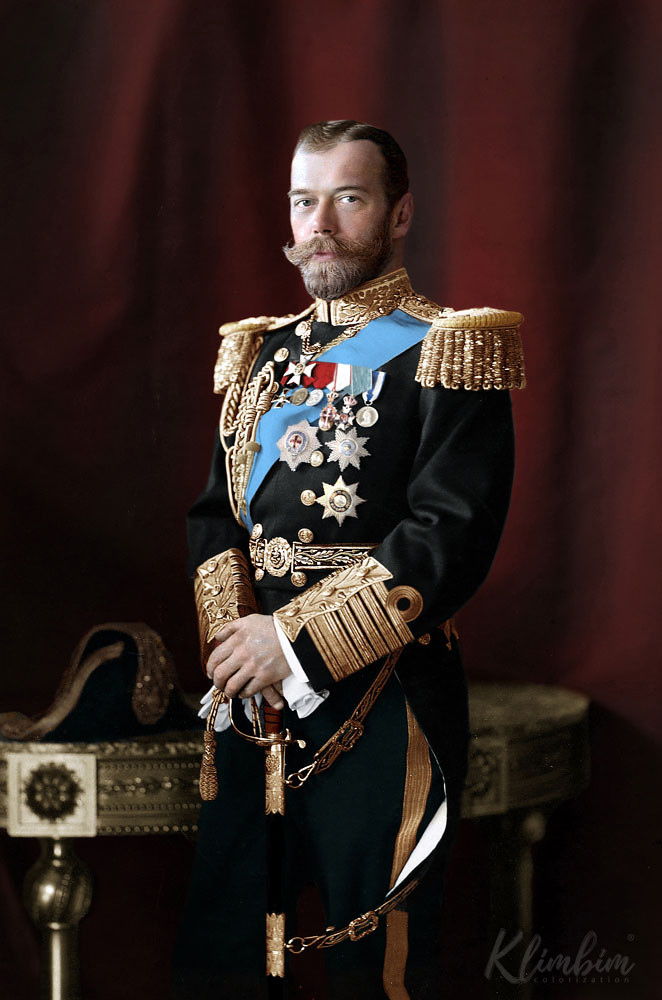
Nicholas Romanov became Czar Nicholas II, the ruler of Russia, at the age of 26. He was made czar when his father died unexpectedly in 1895. Nicholas was not prepared to become a leader at such a young age. It was expected that his father would live another 20 or 30 years. Although Nicholas had visited Parliament in Great Britain and was exposed to how liberal democracies functioned, he planned to continue to rule Russia as his father had—as an absolute monarchy.
I want everyone to know that I will devote all my strength to maintain, for the good of the whole nation, the principle of absolute autocracy, as firmly and as strongly as did my late lamented father. —Czar Nicholas II
Nicholas’ words did not help him in his role as leader. Living conditions for the average Russian under the rule of Nicholas’ father were hard and oppressive. Many Russians were forming liberal groups that hoped to promote change in Russia. Nicholas’ firm control of politics and economics did nothing to help the Russians. Nicholas believed he knew what was best for the people, as his father before him had.
The Russian people continued to be mistreated and exploited in the factories and the mines. They were not granted any political freedom and their influence on political change was minimal. Czar Nicholas was losing his popularity because Russians believed that he was completely unaware of their needs. Czar Nicholas might have been more likely to change his governance style if he had not been so heavily influenced by his wife, Alexandra. Alexandra did not support changing Russia’s absolute monarchy.
How could Czar Nicholas know or understand the needs of his citizens when he only surrounded himself with his advisors and family?
In the late nineteenth and early twentieth centuries, Russian industrial employees worked an average of eleven hours per day, six days a week. Conditions in the factories were extremely harsh, and the factory owners showed little concern for the workers’ health and safety. The workers attempted to form trade unions to help improve the conditions, but the factory owners rejected changes introduced by the workers. In 1903, Father George Gapon, a parish priest interested in helping the workers, formed the Assembly of Russian Workers, a trade union that promoted workers’ rights.
1904 was a bad year for Russian workers. Prices of basic goods and services rose quickly, and wages declined by 20 percent. When four members of the Assembly of Russian Workers were fired from an ironworks factory, Father Gapon decided to take action. He would not tolerate people being fired because they belonged to an organization that wanted to promote liberal ideology.
Under Father Gapon’s leadership, over 110 000 workers in St. Petersburg went on strike. Nicholas remained indifferent to the strike. He did not understand the change the Russian workers wanted. Any change would have made the workers happy. No change only served to further upset the workers.
Over 150 000 people signed the petition. On January 22, 1905, Father Gapon led a group of demonstrators (workers) to the Winter Palace to present the petition to Czar Nicholas II. Nicholas was not at the Winter Palace, and the guards did not know how to react to the demonstrators.
Panicked, the Russian imperial guards shot in the air to scare the protestors away. The demonstrators continued to advance and panic from the Russian imperial guards grew. Estimates of how many people were killed that day vary from 100 to 4000. The monarchy and the protesters reported vastly different numbers.
This incident became known as Bloody Sunday because of the blood spilled on the snow as a result of the attack. It is a commonly held belief that even if Czar Nicholas had been at the Winter Palace, he would not have listened to Father Gapon and the protestor’s demands.
Bloody Sunday is known as the first step of the Russian Revolution of 1917. The hardships and inequalities that people experienced during this time and the spread of liberal values led to the uprising of the workers. Events like Bloody Sunday were dramatic proof of the desire for social, political, and economic change.
After Bloody Sunday, Czar Nicholas II was willing to accept some change. A Duma was introduced. Czar Nicholas promised to introduce some basic civil liberties and to grant the Duma some legislative powers. For example, the Duma was allowed to introduce and pass bills.
However, Czar Nicholas was not willing to give away all of his powers. He retained the right to appoint cabinet ministers. The First Duma wanted universal suffrage, radical land reform, the release of political prisoners, and for Czar Nicholas to fire his appointed ministers. Czar Nicholas was unwilling to introduce these changes, and he dissolved the Duma. The Second Duma and Third Duma suffered the same fate.
It was not until the Third Duma that Nicholas began to warm up to their ideas. He realized that he could no longer ignore the will of the people. Although they were not granted the full power they had wished for, the Duma had an acceptably good working relationship with Czar Nicholas.
Czar Nicholas’ son, Alexis, had a rare blood disorder called hemophilia. He would often bleed excessively from minor cuts and scrapes and a hard bump or knock could cause internal bleeding. At this time, hemophilia was incredibly hard to treat and was often fatal. A monk from Siberia, named Rasputin, seemed to have the power to heal the young Alexis’ bleeding episodes.
Rasputin’s influence in the Romanov family became increasingly alarming to many people. It has been said that Czarina Alexandra and Rasputin had a very close relationship. Because of his special talents, Rasputin also became very influential in government matters. He filled the Russian cabinet with many of his associates. Most Russians were upset with the political situation in Russia.
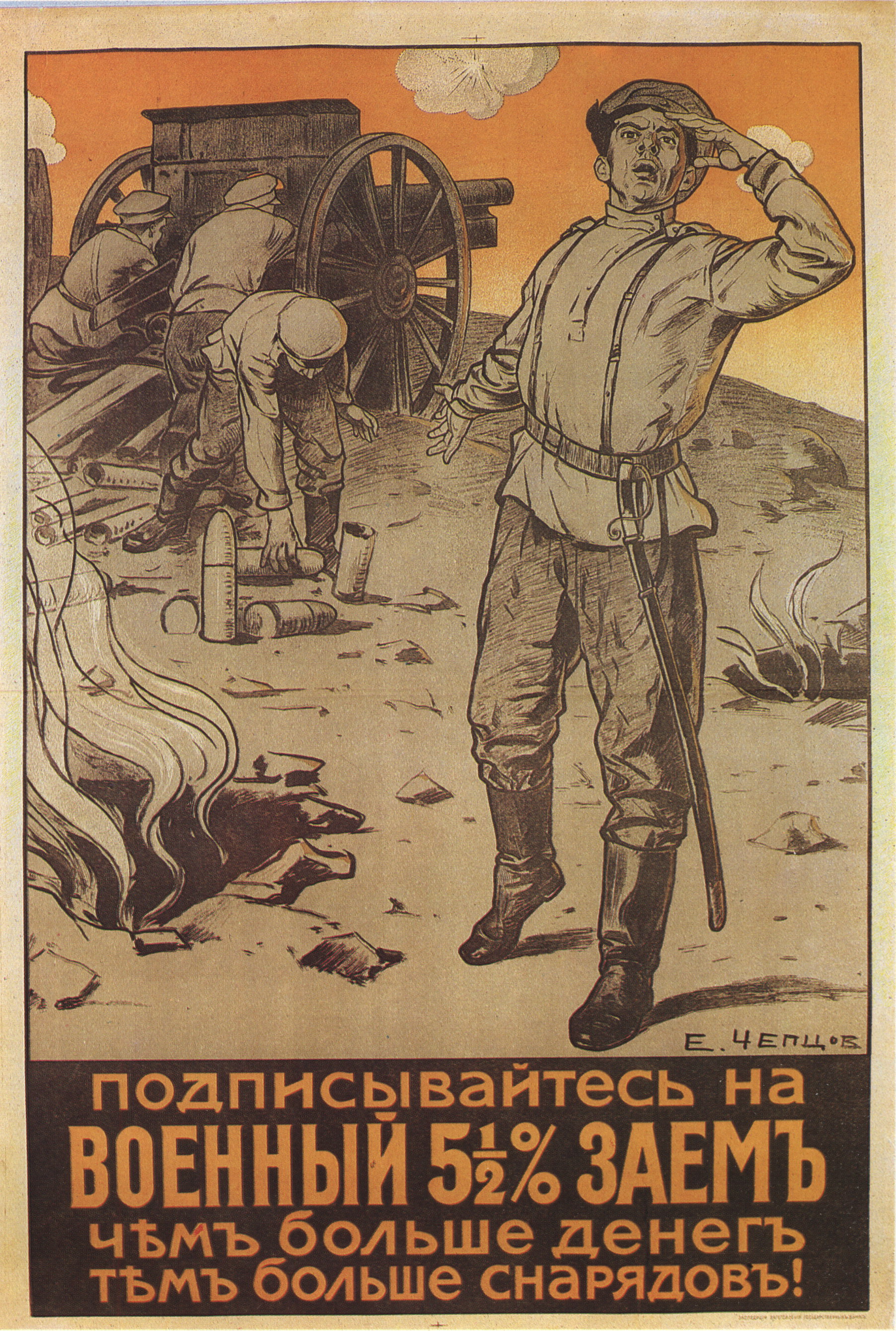
World War I began in 1914. It was a costly war for Czar Nicholas and Russia. Russian industry was not able to supply enough equipment, weapons, supplies, or food to the army. The army generals were incompetent and unable to defend the Russian borders against German attacks, so Nicholas II took control of the army.
Czar Nicholas was not a good general. Soldiers were told to ration supplies. Many soldiers deserted because they did not have enough ammunition, food, and clothing. Often Russian soldiers were given only three bullets per day. The soldiers wondered why they were fighting to defend a country that did not care enough to properly supply its soldiers. Soldiers deserted to go home and fight a new war that was beginning—the war against Czar Nicholas II.
As Russians were fighting in the war, the ideas of Karl Marx were being spread throughout Russia. Marx believed that class struggle between the proletariat and the bourgeoisie would lead the proletariat to rise and take control of the means of production—in other words, industry.
Because the proletariat was the labour force that created the profits for industry, Karl Marx believed profits should be shared evenly among the workers. Russians were ready to defeat Czar Nicholas and create a new government that would care for the needs of the Russian people.
In February 1917, the Russian people were rioting in the streets for food. The war, drought, and Czar Nicholas’ unwillingness to introduce change were the roots of many problems. The military would not stop the rioting or control the people. Czar Nicholas no longer had the support of the army or his people.
As a result, Czar Nicholas abdicated in February 1917 to ensure his family’s safety. Czar Nicholas was exiled to Siberia and later killed. Upon hearing of his death, Russians cheered in the streets.
Czar Nicholas’ death signaled Russia’s first chance to explore liberalism. But how does a population choose a new leader when the people have never had the chance to do that before? How do they know what form of government will be the right form of government for them?
In 1917, the Russian Revolution began. Russians rebelled against the system of absolute monarchy and demanded a new and more liberal form of government. The Duma, or Russian parliament, became a provisional government. Members of the Duma were democratically elected. Alexander Kerensky led the Russian provisional government.
The Duma’s provisional government failed for several reasons:
The provisional government was trying to govern a country of people that had been neglected for a long time. Many different political parties with different political ideologies were formed. All of these political parties placed incredible pressure on the provisional government. The leaders of these parties did not respect the provisional government, as each felt they knew what kind of change was best for the country. The problem was that none of these leaders had enough support to come to power.
Since Russia was always ruled by a Czar and the Duma proved to be ineffective, Russians never really organized themselves into political parties. Instead of working together to create a democratically elected government, political parties competed against each other to gain power. This competition often led to riots.
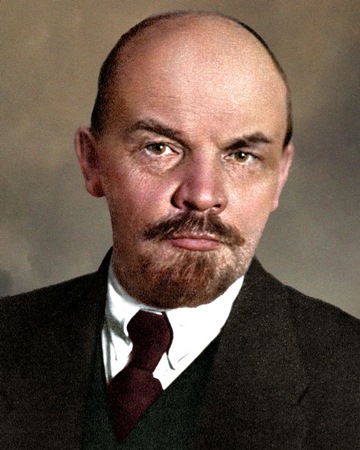
In 1917, the time was right for a leader to seize power. Russia was in an unpopular war with Germany. Russians protested in the streets again. Why were they fighting in a war that had been started by Czar Nicholas? Lenin, the leader of the Bolshevik Party (later called the Communist Party), promised “Peace! Land! Bread!” to his people.
In November 1917, Lenin seized control of the capital, Moscow, without having to fight for it. None of Lenin’s supporters knew how to lead a government, and Russians did not believe that this government would last long.
To ensure that his control was unopposed, Lenin used the following methods to ensure his leadership:
Only five percent of the population of Russia belonged to the Communist Party. Communism was not well known or understood in rural areas. In the cities, very few Russians dared to oppose the Communist Party.
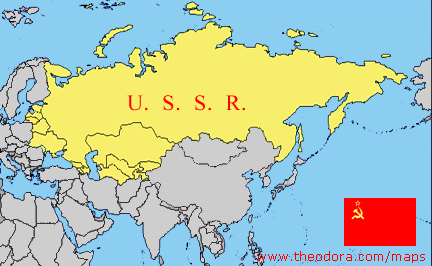
In 1922, Russia became the USSR (Union of the Soviet Socialist Republics), or the Soviet Union. Lenin, the leader, declared his country a democratic country because there were elected officials in the Kremlin (government). The only problem was that the Communist Party was the only legal political party in the country.
Lenin died in 1924 from a stroke. On his deathbed, he requested that one member of the Communist Party, Joseph Stalin, not become the new leader of the Soviet Union because of Stalin’s harsh treatment of citizens. Stalin did become the leader, and he led the Soviet Union to one of the most brutal periods in the country’s history.
Abdicate: an organization of workers who have common goals, such as working conditions and wages
Bolshevik Party: a political party created by Lenin. The goal was to overthrow the Czar and establish communism based on Lenin's slogan, "Peace! Land! Bread!"
Bolsheviks: Russian revolutionaries, led by Lenin, who followed the ideas of Marx
Bourgeoisie: business-owning class
Communist Party: a political party that promotes equality of rights under strict government control
Duma: an elected legislative assembly established by Czar Nicolas II in 1905
Kremlin: a government building in Russia/the Soviet Union
One-party state: a government that legalizes only one political party
Proletariat: industrial workers
Provisional government: a temporary government in place until a general election can be held
Trade union: an organization of workers who have common goals, such as working conditions and wages
You may want to access the following additional resources.
Understanding Communism: Marx and the Soviet Union (video)