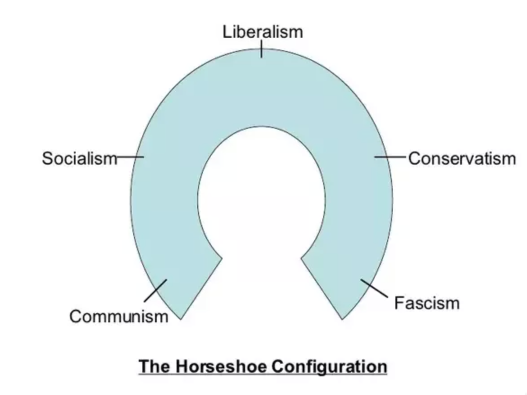
If you take the political and economic spectrum and you look at it more dynamically than a static line, you begin to see that the extremes left and extreme right are actually quite close together in aspects of their ideology. This is how both communism and fascism, while on the opposite end of the straight-line spectrum are actually both authoritarian regimes.
In 2010, a devastating earthquake hit the country of Haiti and killed over 200 000 people. The city of Port au Prince was completely in ruins as buildings collapsed, the water supply was disrupted, and food became scarce.
Even the buildings out of which Haiti’s government and the United Nations operated were demolished. It seemed that no one was in control of the country during the emergency. Many nations took action and began providing aid to those Haitians who were most in need.
The earthquake’s destruction could have led to a variety of political events. For example, Aristide, a former dictator of Haiti, had many supporters in small communities in Haiti. Those supporters could have rebelled, led a coup d’état, and reinstated Aristide as Haiti’s ruler.
Alternatively, the United Nations and any number of countries could have helped the people of Haiti establish a more democratic form of government that is not corrupt and that is willing to put the needs of the people first. Or, the government established in 2006 could have remained in power and nothing might have changed.
Sometimes, in difficult times, citizens want to choose a government to take total control and establish order. What happened to Haiti’s government since the earthquake of 2010?
In this lesson, you will explore the following question: What conditions were necessary for fascist governments to come to power?
The rise of totalitarian governments is sometimes believed to result from conditions of extreme instability. When countries experience extreme economic difficulties or political insecurity, people are more likely to turn to drastic political solutions. The people of countries turning to fascism, however, could never have prepared themselves for what would come.
Like many European countries, Italy’s political power had been in the hands of absolute monarchies and authoritarian forms of government. It was not until the early 1900s that Italy had its first taste of democracy.
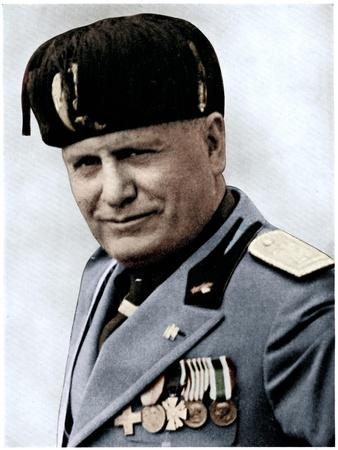
In 1922, Benito Mussolini came to power after a coup d’état led by his fascist party. The most important values of fascism are unity and power.
Mussolini established a group called the Blackshirts. The Blackshirts claimed to restore order to the streets of Italy. In reality, the 200 000 members of the Blackshirts terrorized the people of Italy. The communists, the socialists, and the anarchists were the preferred targets of the Blackshirts.
Mussolini’s fascist movement rapidly grew in numbers. Mussolini’s views were different than those of any other political movement around. In Italy, Mussolini was referred to as Il Duce, meaning “the leader.” He led Italy from 1922 to 1943 until he was overthrown and murdered.
Fascism is definitely and absolutely opposed to the doctrines of liberalism, both in the political and the economic sphere. […]Granted that the 19th century was the century of socialism, liberalism, and democracy, this does not mean that the 20th century must also be the century of socialism, liberalism, and democracy. […] We are free to believe that this is the century of authority, a century tending to the “right,” a fascist century. If the 19th century was the century of the individual (liberalism implies individualism), we are free to believe that this is the “collective” century, and therefore the century of the State.
—Benito Mussolini, 1932
After being defeated in World War I in 1918, Germany established a constitutional democracy based on a multiparty system and proportional representation. The president was the head of state, and the Reichstag was the new parliament building. During this period of democracy between 1919 and 1933, Germany was referred to as the Weimar Republic. Unfortunately, the government of the Weimar Republic did not gain the trust of German citizens.
When the war ended in 1918, Germany was left with no choice but to sign the Treaty of Versailles and take the blame for having caused the war. Germany also had to agree to pay War Reparation Payments to European countries affected by the war. These payments amounted to $20 billion. This money would help to replace the infrastructure that was damaged during the war. Germans were angry with their leaders for having signed the treaty.
There were also economic issues that angered the Germans. Suffering from a war-torn economy, the government printed more money in order to pay its debts. This action led to inflation and a rise in the price of goods.
The new leader of Germany was able to restore confidence in the economy. The United States loaned money to Germany to help the country pay reparation. The German economy prospered until the Great Depression began in 1929.
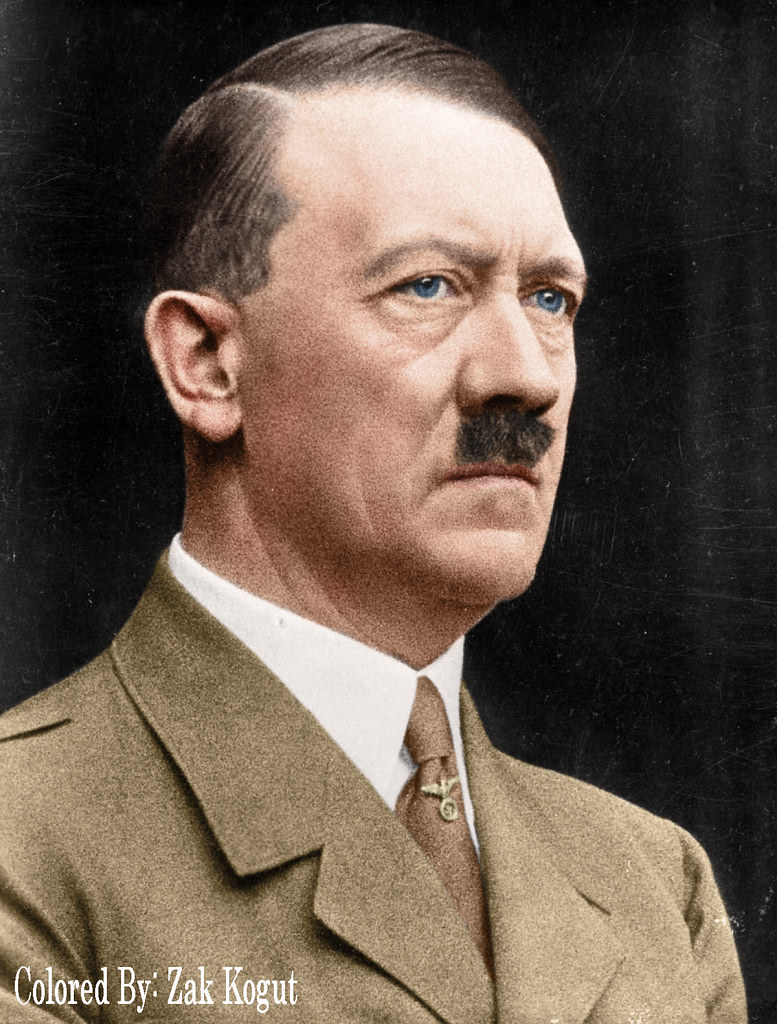
Adolf Hitler, dictator of Germany from 1933–1945, followed Mussolini’s model of fascism. Hitler developed and led German fascism as the leader of the National Socialist German Workers’ Party. This ideology is also known as Nazism.
Fascism believes in increasing the power and role of the state in society and in controlling or eliminating political opposition. Unlike communism, fascism preserves private ownership and private property. Although private ownership and private property are preserved, both are guided by the state.
Fascism has no single guiding philosophy or founding political theory. Instead, the political ideology is based on a number of powerful ideas and the fascist experience of the twentieth century. Fascism is a form of totalitarian dictatorship founded on principles of nationalism, elitism, racism, and militarism.
There were a number of circumstances which made the rejection of the liberal democracy possible:
Following the First World War, the German economy was in ruins and they could not continue making the reparations payments imposed by the Treaty of Versailles. As a consequence, France and Belgium invaded the Ruhr industrial region hoping to make profits from the business area. German workers went on strike and manufacturing stopped, inflation went up causing more economic difficulties.
Economic reforms including new currency, brought some stability. Borrowing money from American banks allowed the German government to continue making reparation payments.
The Great Depression brought more hardship to the German people. This opened the door for Hitler and the Nazi Party to blame the state for the people's situation, taking advantage of the unemployment and desperation.
The importance of the nation is at the core of fascists’ beliefs. If all people work hard and do well, the nation will prosper and achieve greatness. In Germany, fascism meant uniting the people under one common belief. If all citizens believe they are united and have a common belief, they will work better together.
It was proven that citizens would even be ready to fight and die to defend their nation. Adolf Hitler wrote of recognizing two gods: one in heaven and the other in Germany.
Fascists reject liberal forms of government. They believe that only one person can lead the country to greatness. When too many people make decisions, the weak are represented. Fascists believe that the best government leaders are those leaders whose knowledge and intelligence make them superior to others.
Fascists reject democracy as a form of government. To them, democracy is indecisive and weak. Fascists believe that democratic attempts to represent the interests of a majority prevent a nation from becoming great.
Fascists believe that good government is only possible under the rule of the elite, whose intelligence and knowledge distinguish them from the common crowd. The elite includes individuals whose leadership and national purpose make them superior to others. People who have such qualities would rule by their own law—all others would follow.
Theories of evolutionary superiority were attractive to fascists in Nazi Germany. The belief that some races were biologically more advanced than other races contributed to an increased sense of national pride. The ideas of racial superiority and national greatness led fascists to conclude that the superior race should have the superior nation—a larger nation. This belief served to justify the mistreatment of citizens considered inferior and to justify military violence against other races/nations.
Fascists were people of action. The struggle was seen as a part of the life of people, and so the struggle was also necessary for the survival of the nation. The military, with its discipline and pageantry, was an inspirational organization. Militarism was also useful in achieving the goals of fascist expansion.
For there is one thing we must never forget…the majority can never replace the man. And no more than a hundred empty heads make one wise man will a heroic decision arise from a hundred cowards. There must be no majority decisions, but only responsible persons, and the word ‘council’ must be restored to its original meaning. Surely every man will have advisors by his side, but the decision will be made by one man. The Nazi Party should not become a constable of public opinion but must dominate it.
—Adolf Hitler (Source: Adolf Hitler. Mein Kampf. New York: Reynal & Hitchcock, 1939. pp. 105, 669-670, 698).
As a political system, fascism is authoritarian. Fascism rules by force without regard for constitutional restraint. All power is in the hands of the leader who is not responsible or accountable to the people. Authoritarianism places a higher value on obedience than on freedom of thought and expression.
Elitism: the advocacy or existence of an elite as a dominating element in a system or society
Fascism: a political ideology characterized by an extremely right-wing view and supported by a totalitarian government
Inflation: a rise in prices related to an increase in the volume of money and resulting in the loss of value of the currency
National Socialist German Workers’ Party (Nazi Party): a political party founded by Adolf Hitler that ruled Germany from 1920 to 1933. The predecessor to the Nazi Party was the German Workers’ Party.
State: a central government or authority
War Reparation Payments: Germany’s obligation to give money for the reconstruction of countries damaged by war
Weimar Republic: a name used to describe Germany from 1919 to 1933
Watch "Love Hate and Propaganda". Use this worksheet to help you follow along and pick out the authoritarian governments and their techniques
You may want to access the following additional resources.